Athletic Stride Synchronization Between 100-Meter Sprint Acceleration Phases and Rugby Scrum Engagement Timing for Enhanced Forward Drive Stability
Avery Vogel · Nov 14, 2026
Athletic Stride Synchronization Between 100-Meter Sprint Acceleration Phases and Rugby Scrum Engagement Timing for Enhanced Forward Drive Stability
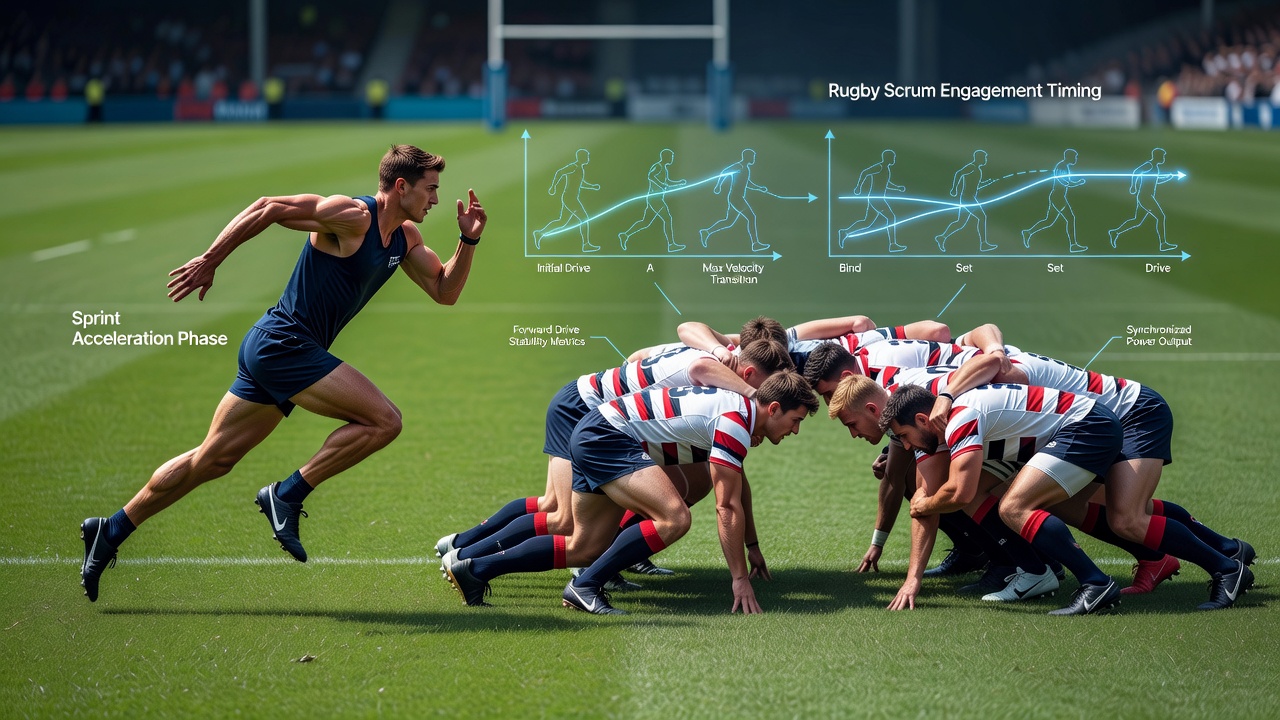
Biomechanical research has examined how stride patterns from 100-meter sprint acceleration connect with rugby scrum engagement sequences to support forward drive stability across multiple studies conducted over the past decade. Athletes in both disciplines generate explosive horizontal force through coordinated lower-body mechanics, yet the timing of foot placement and pelvic rotation differs between track starts and forward pack drives. Observers note that synchronization occurs when sprinters adjust their initial acceleration strides to match the engagement cadence required during scrum setups, creating a shared framework for power transfer through the kinetic chain.
Biomechanics of Sprint Acceleration Strides
During the first 30 meters of a 100-meter sprint athletes rely on short, powerful strides that emphasize hip extension and ground reaction forces directed backward, according to data from motion capture analyses at several performance centers. Researchers have tracked how these early strides involve rapid ground contact times under 0.15 seconds combined with forward lean angles that reach up to 45 degrees at the torso. Studies indicate that elite performers maintain consistent stride frequencies around 4.5 to 5 steps per second in this phase, which produces measurable increases in horizontal velocity before transition to upright running mechanics begins.
Rugby Scrum Engagement Timing
Scrum engagement in rugby requires precise timing between the eight forwards as they bind and drive against the opposing pack, with engagement commands typically spaced at intervals of 0.8 to 1.2 seconds depending on referee protocols. Data collected from professional matches shows that successful forward drives correlate with synchronized foot placements where the loosehead prop and hooker initiate drive steps within 0.2 seconds of each other. Analysts have recorded pelvic stability metrics during these moments, noting that lateral sway decreases when players time their strides to align with the ball insertion moment.
Linking Sprint Mechanics to Scrum Drive Stability
Performance analysts have identified overlapping movement elements where sprint acceleration stride timing informs scrum engagement sequences through shared emphasis on horizontal force application and trunk rigidity. One study from the Australian Institute of Sport tracked how rugby players who incorporated sprint-specific acceleration drills improved their scrum drive distance by an average of 12 centimeters over a season. Those same athletes demonstrated reduced variability in foot strike timing during live scrums, which contributed to greater pack cohesion under fatigue conditions.
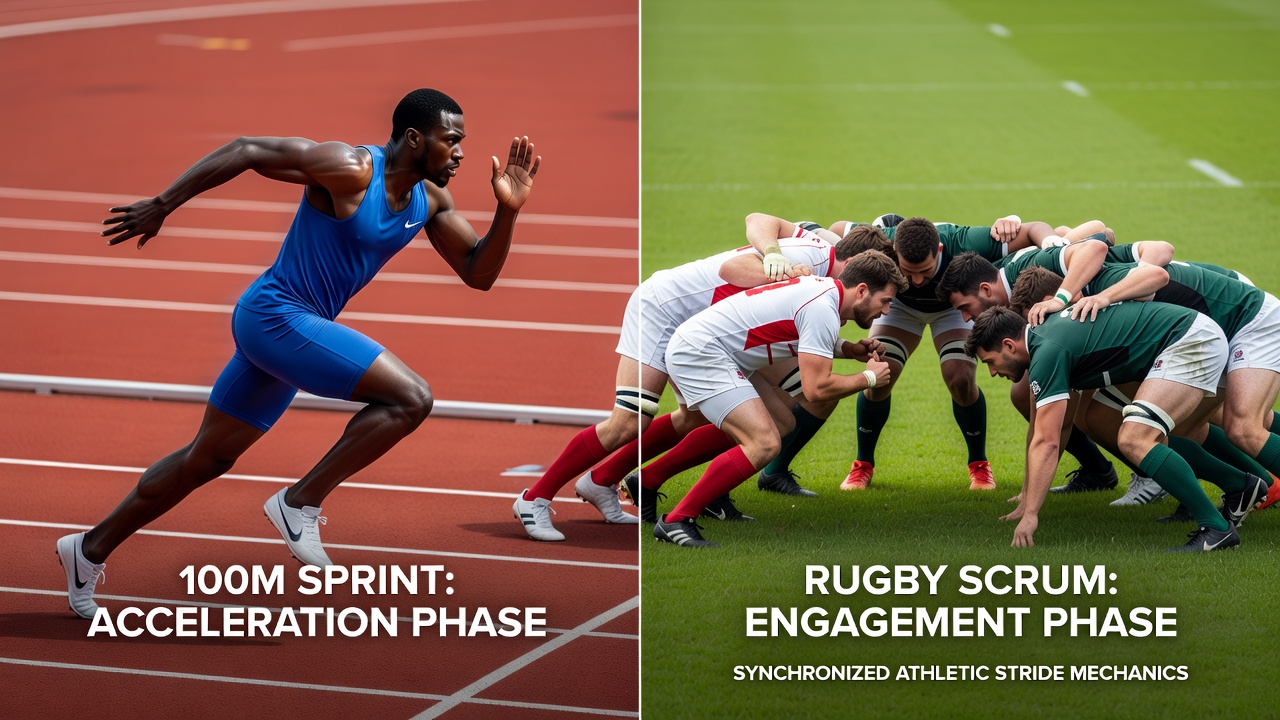
Training protocols often combine both elements by having forwards practice modified acceleration runs that replicate the low body position used at scrum engagement. Video analysis reveals that athletes who synchronize their third or fourth sprint stride with simulated engagement cues show improved force plate readings in the horizontal plane. This approach draws from research published through the Canadian Sport Institute Pacific, where investigators measured ground reaction forces across both disciplines and found common peaks during the initial drive phase.
Practical Applications in November 2026 Training Cycles
Coaching staff across several professional rugby programs have begun integrating November 2026 pre-season blocks that pair 100-meter acceleration sessions with scrum machine work. These sessions use timing gates and wearable sensors to measure stride synchronization, with feedback delivered immediately after each repetition. Figures from recent implementations indicate that packs completing 15 to 20 combined drills per week maintain higher average drive velocities compared with groups using isolated training methods.
Strength and conditioning specialists emphasize the role of core bracing techniques borrowed from sprint starts, which help forwards resist upward lift forces during engagement. Data from match analysis platforms shows that teams employing these synchronized methods record fewer reset scrums caused by early drive collapse. Observers have noted that the transfer appears most pronounced in loose forwards who already possess background in track sprinting events.
Measurement Tools and Data Collection
Modern assessment relies on inertial measurement units placed at the pelvis and tibia to capture stride parameters in real time during both sprint and scrum activities. Researchers compare metrics such as stride length symmetry, contact time ratios, and angular velocity of the hips across the two contexts. Reports from European rugby academies highlight how these tools allow coaches to identify athletes whose natural sprint mechanics already align closely with scrum requirements, thereby streamlining individualized programming.
Conclusion
Evidence from biomechanical studies and applied training programs demonstrates measurable connections between 100-meter sprint acceleration strides and rugby scrum engagement timing that support enhanced forward drive stability. Athletes and coaching teams continue to refine these overlaps through sensor-based feedback and targeted drills, with ongoing data collection expected to expand understanding of cross-discipline transfer effects.