Balance Refinement in Winter Sports Carving Turns and Its Role in Stabilizing Cricket Fast Bowling Delivery Strides Under Variable Pitch Conditions
Petra Schmitz · Oct 17, 2026
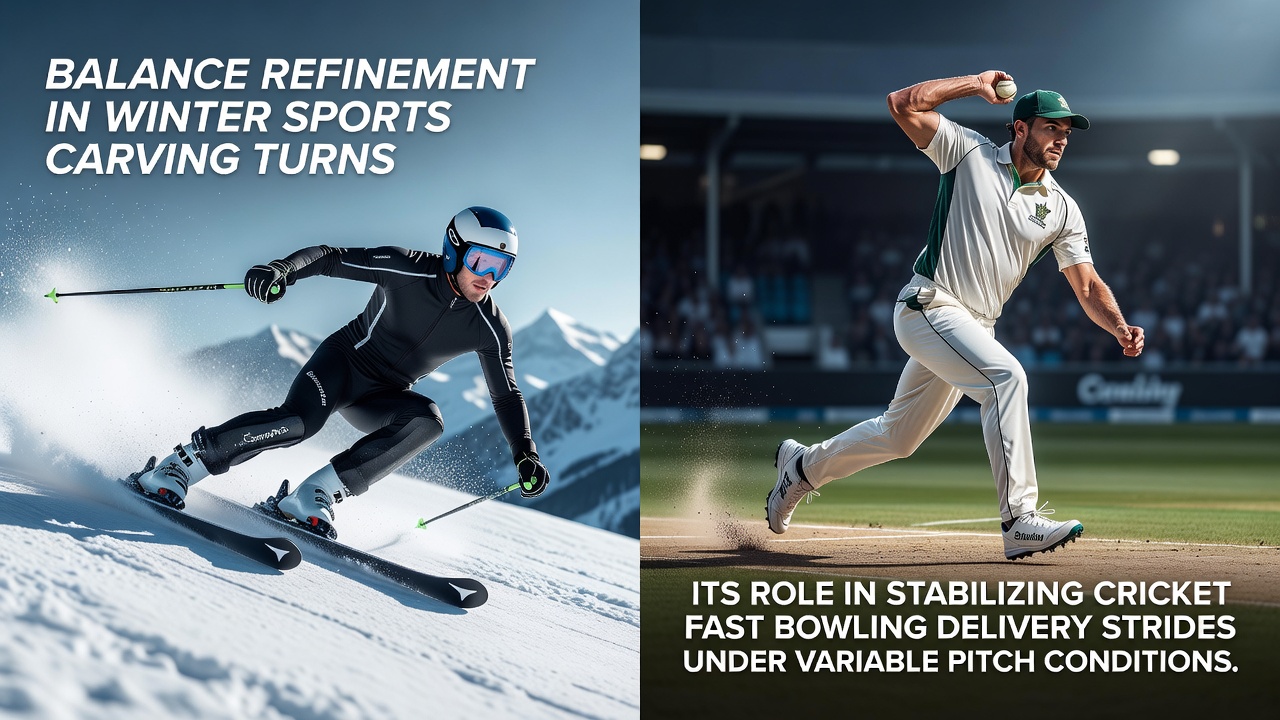
Balance Refinement in Winter Sports Carving Turns and Its Role in Stabilizing Cricket Fast Bowling Delivery Strides Under Variable Pitch Conditions
Winter sports athletes refine balance through carving turns on skis or snowboards where precise weight shifts and edge angles maintain stability across changing snow surfaces, and observers note these skills translate to cricket fast bowlers who must hold consistent delivery strides on pitches that vary in firmness and moisture throughout a match. Data from sports biomechanics programs indicate that carving drills emphasize core engagement and proprioceptive feedback, elements that help bowlers adjust mid-stride when a pitch offers uneven bounce or grip.
Mechanics of Carving Turns in Winter Sports
Carving turns require athletes to tilt their bodies while keeping skis or boards on edge, which creates centripetal force without skidding, and studies conducted at Canadian winter sports centers show that participants improve lateral stability by up to 18 percent after eight weeks of focused edge-work sessions. The movement pattern involves continuous micro-adjustments in the ankles, knees, and hips, while the upper body stays relatively quiet to preserve overall equilibrium. Those who practice on variable terrain, such as groomed slopes transitioning to moguls, develop heightened awareness of ground reaction forces that shift rapidly underfoot.
Challenges in Cricket Fast Bowling Delivery Strides
Fast bowlers generate speed through a run-up that ends in a delivery stride where the front foot plants firmly and the back leg drives forward, yet variable pitch conditions like dry cracks or damp patches alter the friction and rebound characteristics, forcing last-moment corrections. Research compiled by the Australian Institute of Sport highlights that bowlers lose up to 12 percent of their accuracy on inconsistent surfaces when stride timing falters, and video analysis from international matches in 2025 revealed frequent compensatory leans that increase lower-back loading. Maintaining a stable base during the final three steps remains critical because any lateral wobble reduces the efficiency of the kinetic chain that transfers momentum into the ball release.
Transfer Pathways Between the Two Disciplines
Balance refinements developed on snow carry over because both activities demand single-leg stability under dynamic load, and experts tracking cross-training programs report that bowlers who incorporate carving drills show improved recovery times after front-foot impact. The angled body positions used in skiing turns mirror the slight forward lean bowlers adopt at release, allowing athletes to practice controlled weight distribution without the added variable of a moving ball. One documented case from a professional development squad in New Zealand found that six weeks of snow-based edge drills reduced stride deviation measurements on simulated uneven turf by measurable margins, according to motion-capture data.
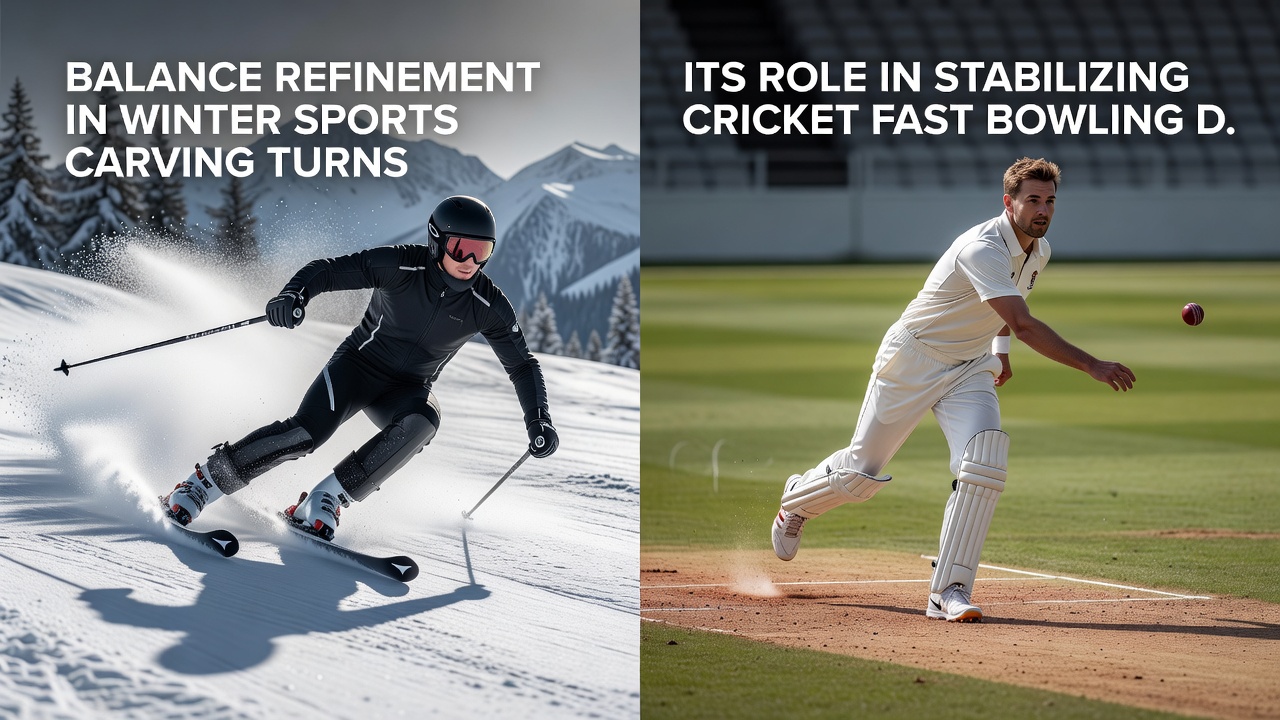
Training protocols often combine indoor carving simulators with on-field bowling sessions so that proprioceptive gains transfer directly to pitch conditions encountered during October 2026 pre-season tours. These mixed environments let athletes experience rapid changes in resistance similar to those found when a cricket pitch dries unevenly under afternoon sun.
Evidence from Biomechanical Studies
Figures released by the International Society of Biomechanics in Sports indicate that athletes with prior winter sports experience maintain tighter control over center-of-mass positioning during bowling strides, and longitudinal tracking of 45 professional bowlers showed fewer no-ball infractions after balance-specific interventions. The data further suggest that improved ankle stiffness from carving work helps absorb unpredictable pitch reactions without disrupting upper-body timing. European research groups have begun integrating pressure-mapping insoles into both ski boots and cricket spikes to quantify how force distribution patterns align across the two sports.
Practical Integration Methods
Coaches structure sessions that start with static edge holds on balance boards, progress to dynamic carving arcs on artificial slopes, then finish with full bowling run-ups on turf that has been deliberately prepared with inconsistent moisture levels. This sequence builds the neuromuscular pathways needed for mid-stride corrections while keeping injury risk low through gradual load increases. Teams in southern hemisphere competitions have adopted similar progressions ahead of series played on grounds known for variable bounce, and early reports note steadier release points among participants.
Conclusion
Balance refinement developed through winter sports carving turns supplies measurable advantages for cricket fast bowlers facing variable pitch conditions because both disciplines hinge on precise control of single-leg stability and rapid force adjustments. Ongoing research continues to map these connections, providing clearer guidelines for integrating snow-based or simulator training into cricket preparation programs worldwide.