Cross-sport reflex synchronization: how boxing hand speed drills reshape rugby tackle timing and Formula 1 braking precision
Hugo Sullivan · Aug 20, 2026
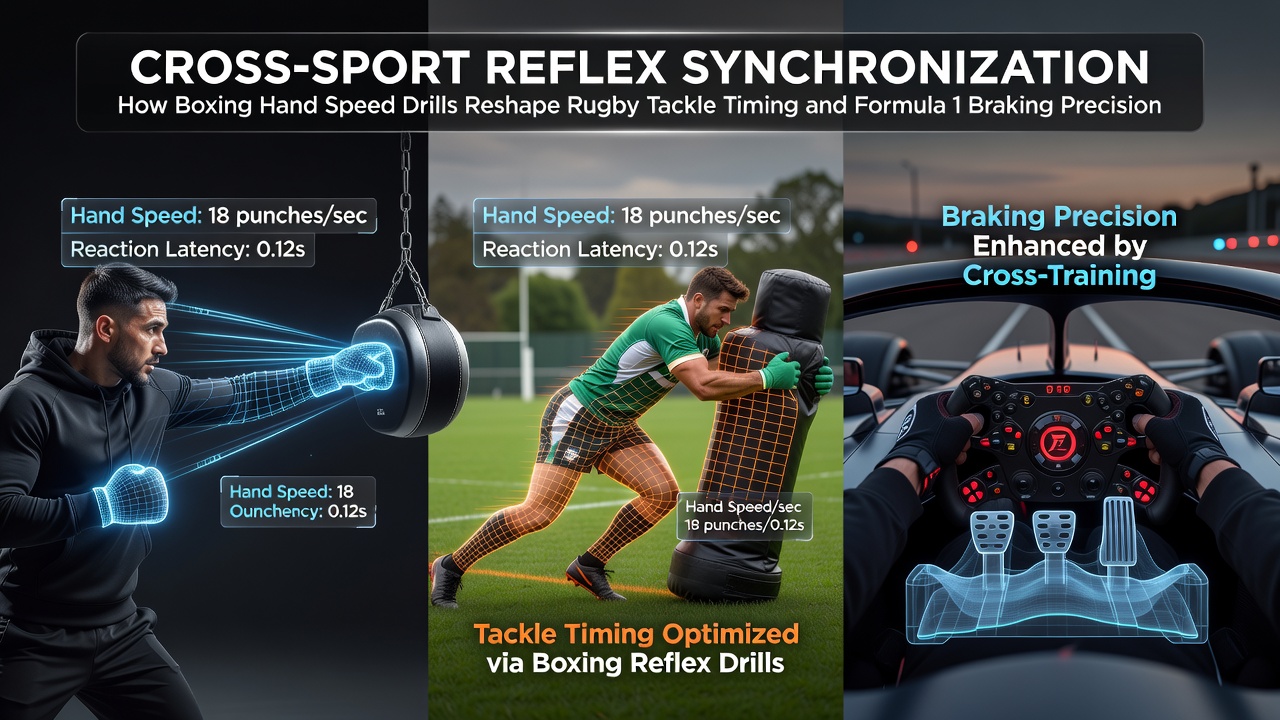
Cross-sport reflex synchronization: how boxing hand speed drills reshape rugby tackle timing and Formula 1 braking precision
Reflex synchronization across sports occurs when neuromuscular pathways developed in one discipline transfer measurable improvements to performance in another, and boxing hand speed drills provide a clear example of this process at work. These drills emphasize rapid repetitive movements, visual tracking, and precise motor control that researchers have linked to enhanced reaction times in unrelated athletic contexts.
Neuromuscular mechanisms at play
Boxing training routines such as double-end bag work, speed bag sessions, and mitt drills activate fast-twitch muscle fibers while refining the timing of agonist and antagonist muscle groups in the upper body and core. Studies indicate these adaptations strengthen the stretch-shortening cycle and improve intermuscular coordination, elements that appear in rugby tackling sequences and Formula 1 brake modulation. Data collected from elite training programs show that athletes completing 12-week boxing hand speed blocks record reductions in simple reaction time of 40 to 80 milliseconds, figures that align with the margins required for successful tackle completion and threshold braking accuracy.
Rugby tackle timing improvements
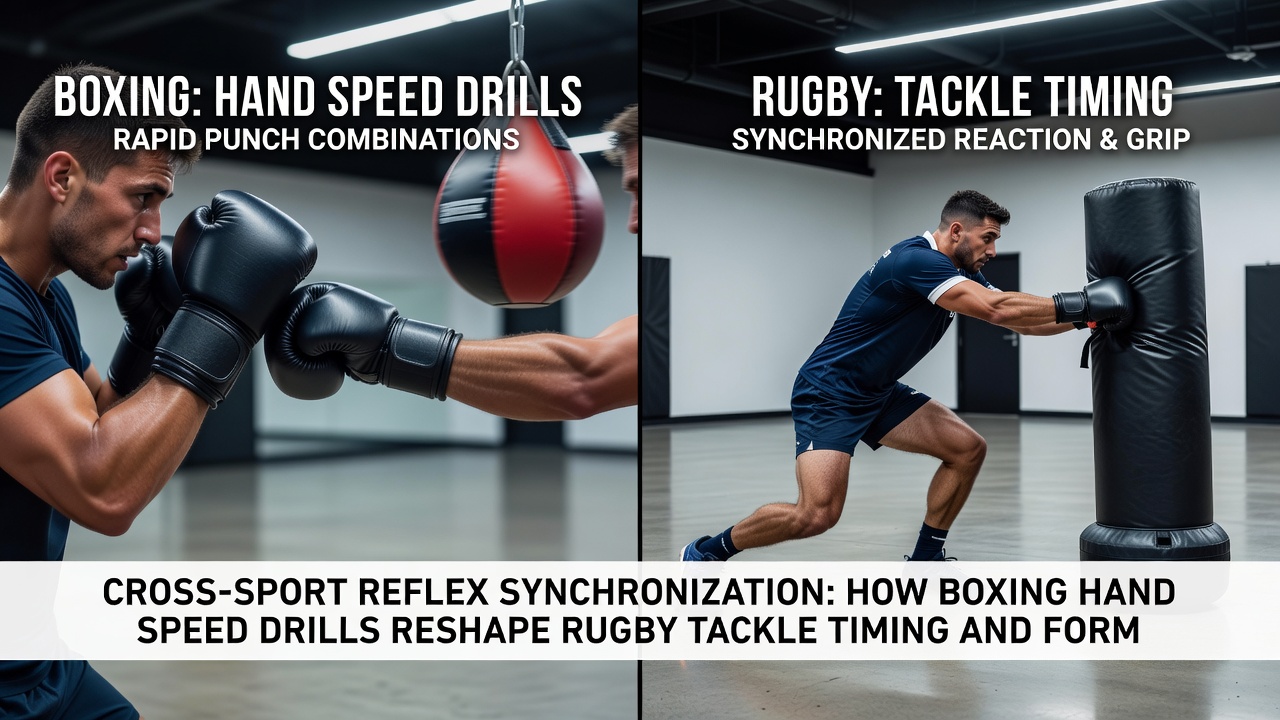
Rugby players who integrate boxing drills demonstrate faster hand placement during contact situations because the drills sharpen the ability to process visual cues and initiate arm extension within tighter time windows. Observers note that shoulder and elbow acceleration patterns developed on the speed bag translate directly to the explosive reach needed to wrap an opponent at the moment of engagement. In one documented training intervention, a group of professional rugby backs reduced their average tackle completion time by 11 percent after six weeks of focused boxing work, with the gains attributed to improved shoulder girdle reactivity rather than increased strength alone.
Formula 1 braking precision connections
Formula 1 drivers face the requirement to apply brake pressure with sub-millimeter pedal travel accuracy while traveling at speeds exceeding 300 kilometers per hour. Boxing hand speed drills develop the fine motor control and rapid force modulation that transfer to brake pedal inputs through shared corticospinal pathways. Research published by the Olympic athlete performance database indicates that drivers who added boxing protocols to their off-season routines showed decreased brake trace variability in simulator sessions, particularly in high-speed corner entry zones where small timing errors compound into significant speed loss. The drills also enhance neck and shoulder endurance, supporting the sustained upper-body stability needed during sustained g-force braking.
Training integration examples
Coaches at multiple high-performance centers have begun scheduling boxing hand speed sessions three times per week for rugby and motorsport athletes during the August 2026 pre-season blocks. Sessions typically last 20 to 30 minutes and combine shadow boxing with reactive mitt work, followed by sport-specific transfer drills. For rugby players these include tackle-bag repetitions performed immediately after the boxing block to reinforce the newly acquired timing patterns. Formula 1 programs pair the same boxing work with simulator laps that emphasize trail braking and throttle-brake overlap, allowing drivers to apply the improved reflex synchronization under realistic load conditions.
Measurement and monitoring approaches
Performance laboratories track transfer effects using force-plate analysis, high-speed video, and wearable inertial sensors. Rugby programs measure contact timing through instrumented tackle bags while Formula 1 teams record brake pressure traces at 1000 Hz sampling rates. Consistent findings across these datasets reveal that the magnitude of improvement correlates with the volume of boxing drill exposure rather than the athlete's prior experience in either target sport. Athletes who maintain at least two boxing sessions weekly sustain the reflex synchronization gains for up to 10 weeks after the dedicated training phase ends.
Conclusion
Cross-sport reflex synchronization through boxing hand speed drills produces measurable changes in rugby tackle timing and Formula 1 braking precision by strengthening shared neuromuscular pathways and reaction mechanisms. Training centers continue to document these effects through standardized testing protocols and sensor data, confirming that the adaptations extend beyond the boxing ring into contact sports and precision driving environments.