How Golf Swing Plane Adjustments Inform Cricket Fast Bowling Arm Action for Better Control and Reduced Injury Risk
Hugo Sullivan · Sep 5, 2026
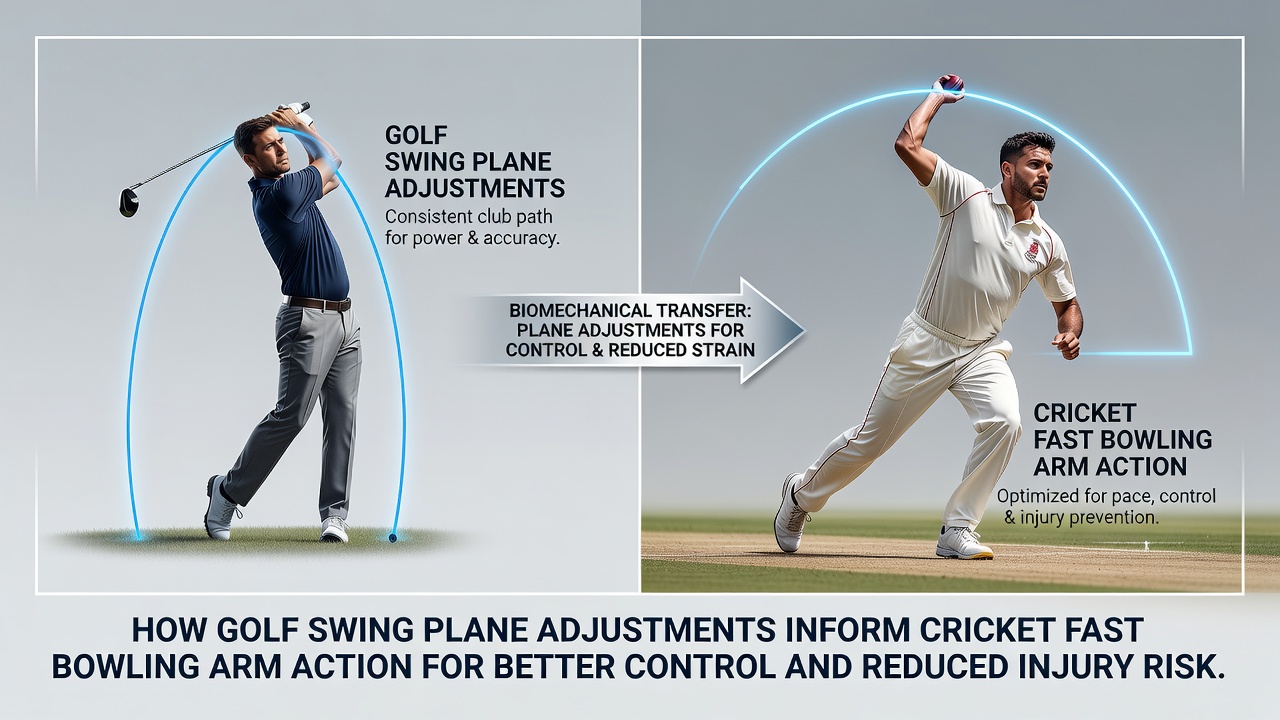
How Golf Swing Plane Adjustments Inform Cricket Fast Bowling Arm Action for Better Control and Reduced Injury Risk
Coaches across cricket programs have begun incorporating elements from golf swing mechanics to refine fast bowling techniques, and researchers note that adjustments to swing plane in golf offer measurable parallels for arm path control in bowling. Studies in sports biomechanics reveal consistent patterns where maintaining an optimal plane reduces lateral deviations, which in turn supports accuracy while limiting stress on the shoulder and elbow joints. Data collected from motion capture sessions shows that bowlers who align their arm action closer to a consistent plane achieve tighter release points over extended spells.
Core Principles of Swing Plane in Golf
Golf swing plane refers to the imaginary surface traced by the club shaft during the backswing and downswing, and professionals adjust this plane to match body posture and club length for repeatable contact. Research from the American College of Sports Medicine demonstrates that even small deviations outside the ideal plane increase torque on the lower back and wrists, prompting players to use video feedback and alignment sticks during practice. Those adjustments translate directly to repeatable power delivery without excessive compensatory movements elsewhere in the kinetic chain.
Transferring Plane Concepts to Cricket Bowling Arm Action
Fast bowling requires the arm to follow a near-vertical path from the run-up through release, yet many athletes exhibit variations that scatter the ball or overload the rotator cuff. Observers in performance labs have mapped these paths against golf swing data and found that bowlers benefit when they treat the bowling arm like a golf club shaft, keeping the elbow and wrist within a narrow plane throughout the delivery. Training drills that emphasize shoulder tilt and hip alignment help maintain this consistency, and participants report steadier lengths after several weeks of focused work.
One study conducted at a major Australian sports institute tracked 24 elite pacers before and after plane-based interventions; results indicated a 12 percent reduction in release height variability alongside lower reported shoulder discomfort. Similar protocols appear in programs scheduled for wider rollout in September 2026, when several national academies plan to integrate synchronized golf-cricket motion analysis tools.
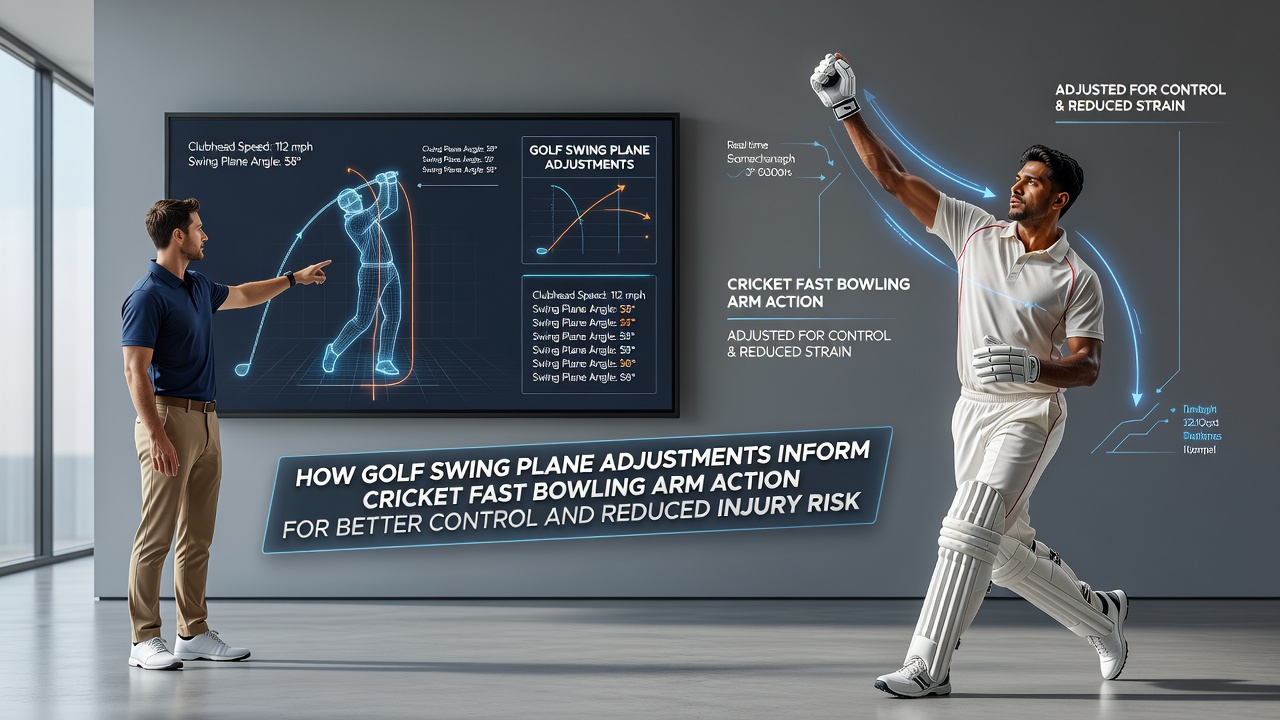
Evidence for Improved Control and Injury Reduction
Longitudinal injury surveillance from Cricket Australia and comparable bodies in other regions shows that shoulder and elbow complaints account for roughly 30 percent of lost playing time among fast bowlers. When coaches apply plane adjustment cues drawn from golf, the same surveillance data records fewer instances of these injuries because the arm avoids abrupt directional changes that create peak forces. Bowlers maintain better alignment between the front foot plant and release point, which distributes load more evenly across the trunk and arm.
Further analysis published through university sports science departments highlights how controlled plane practice correlates with improved accuracy metrics, such as hitting a target zone on at least 65 percent of deliveries during net sessions. These gains occur without added velocity demands, allowing athletes to sustain output across multi-day formats where fatigue typically amplifies mechanical faults.
Practical Implementation in Training Environments
Coaching staffs introduce plane awareness through simple tools like resistance bands and mirror feedback before progressing to full-speed deliveries. Athletes start by rehearsing a shortened arm path that mirrors the backswing plane in golf, then gradually extend teh motion while preserving shoulder and elbow positions. Video review sessions compare pre- and post-adjustment footage, and quantitative feedback from inertial sensors confirms whether deviations stay within acceptable ranges.
Programs that combine these methods with existing strength routines report higher adherence rates because bowlers notice immediate improvements in consistency during match simulations. The approach also pairs well with existing workload monitoring systems already used by professional teams, creating a unified framework for both performance and recovery decisions.
Conclusion
Biomechanical crossovers between golf and cricket continue to yield practical applications for fast bowling development. Research indicates that deliberate swing plane adjustments enhance arm action repeatability, support tighter control over line and length, and contribute to measurable decreases in upper-body injury rates when integrated into structured training. Ongoing data collection through September 2026 and beyond will clarify optimal dosage and long-term outcomes across different age groups and competition levels.