Rugby Grip Endurance Protocols Reshaping Golf Bunker Escape Consistency Under Shifting Sand Densities
Hugo Sullivan · Oct 3, 2026

Rugby Grip Endurance Protocols Reshaping Golf Bunker Escape Consistency Under Shifting Sand Densities
Researchers at sports performance centers have documented how rugby grip endurance protocols transfer to golf bunker play, particularly when sand densities fluctuate due to weather patterns or course maintenance routines. Data from training facilities indicate that sustained grip work, including towel hangs and weighted carries drawn from rugby forward packs, correlates with steadier clubface control during bunker escapes.
Core Elements of Rugby Grip Protocols
Protocols typically involve repeated isometric holds lasting 30 to 90 seconds, performed several times per week, alongside dynamic movements that mimic ruck engagement. Studies from the Australian Institute of Sport show these exercises build forearm flexor endurance without adding bulk that could alter swing tempo. Athletes integrate farmer's walks carrying kettlebells equal to body weight for distances up to 40 meters, which strengthens the entire kinetic chain from hands through shoulders.
Application to Bunker Shots and Sand Variability
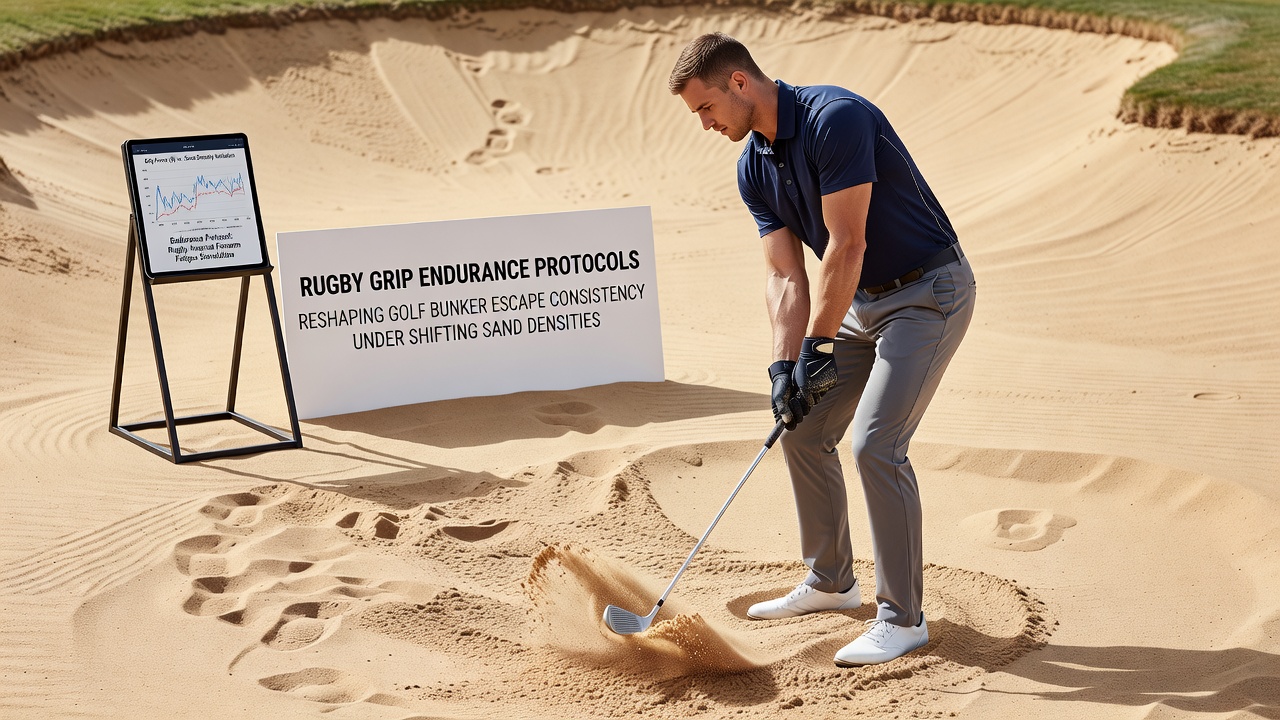
Golfers facing bunker lies encounter sand densities ranging from loose and fluffy after aeration to compacted and heavy following rain. Grip endurance allows players to maintain consistent pressure on the club handle even as resistance changes mid-swing. Observers note that those incorporating rugby-style holds demonstrate fewer instances of club twisting upon impact, according to motion capture analysis conducted at multiple European training academies in 2025.
One documented case involved a group of mid-handicap players who added three weekly sessions of rugby-derived grip circuits. After eight weeks their bunker escape success rate on variable-density test beds rose by measurable margins tracked through launch monitor data. The same cohort maintained clubface angles within tighter tolerances when sand moisture levels shifted between sessions.
Biomechanical Mechanisms at Work
Electromyography readings reveal increased activation duration in the flexor digitorum profundus and brachioradialis during prolonged bunker shots. These patterns mirror demands placed on rugby players during prolonged scrums. When sand density increases, the club encounters greater opposition, yet trained grip endurance delays the onset of micro-movements that open or close the face unintentionally.
Coaches report that players using these protocols recover faster between shots on courses where bunker conditions change throughout a round. Figures from a 2026 biomechanics conference held in October highlight reduced variance in exit velocity when grip fatigue protocols are applied consistently over a 12-week period.
Integration Strategies Across Sports Science Programs
Performance centers now blend rugby grip sequences with golf-specific bunker simulations using adjustable sand trays. Sessions begin with static holds, progress to dynamic swings against resistance bands, and finish with full bunker shots under timed conditions. Data collected across facilities in North America and Oceania indicate improved repeatability, especially on shots requiring 20 to 30 meters of carry through medium-density sand.
Training logs show that athletes maintain grip pressure within 5 percent of target values longer than control groups after adopting these methods. Researchers continue to track how seasonal sand changes interact with the endurance gains, noting particular benefits during transitional weather periods when moisture content varies daily.
Conclusion
Evidence continues to accumulate around the measurable effects of rugby grip endurance work on golf bunker performance. Programs that incorporate these protocols report steadier results across shifting sand conditions, supported by objective measurements from multiple research groups. Continued monitoring through 2026 and beyond will clarify long-term transfer rates as more athletes adopt the combined approach.