Vestibular Adaptations from Formula One Cockpit Training Reshape Goalkeeper Dive Reactions and Basketball Jump Shot Equilibrium
Avery Müller · Aug 22, 2026
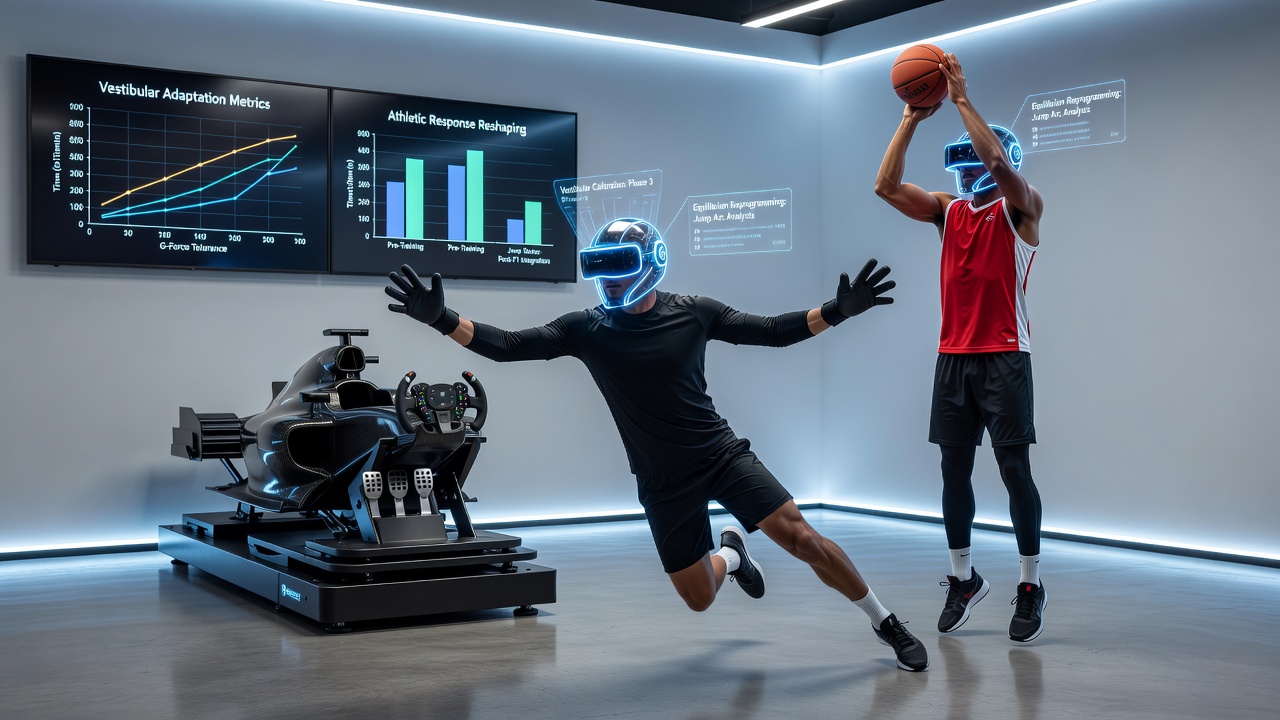
Vestibular Adaptations from Formula One Cockpit Training Reshape Goalkeeper Dive Reactions and Basketball Jump Shot Equilibrium
Formula One drivers undergo repeated exposure to high lateral and vertical accelerations that trigger measurable changes in the vestibular system, and those same adaptations now appear in training protocols for football goalkeepers and basketball players. Research indicates that the semicircular canals and otolith organs adapt to sustained G-forces by recalibrating thresholds for angular acceleration detection, which in turn shortens reaction times during rapid directional changes.
Studies conducted at multiple European sports science centers show that drivers who complete at least 40 hours of cockpit centrifuge work per season exhibit reduced nystagmus latency when subjected to sudden yaw movements. The same metric has been tracked in goalkeepers who incorporate similar centrifuge sessions, and data from the 2025-2026 season reveal faster initiation of dive sequences when the goalkeeper starts from a low crouch position.
Transfer Mechanisms Between Motorsports and Field Sports
Transfer occurs because both environments demand precise control of head orientation while the body experiences rapid shifts in linear and angular momentum. In F1 cockpits the driver must maintain visual fixation on the track ahead while the car corners at forces exceeding 5 g, and researchers have documented corresponding hypertrophy in the utricular maculae after repeated exposure. Football goalkeepers face comparable demands when diving laterally at full extension, yet they rarely train the vestibular component in isolation.
Basketball players encounter a different but related challenge during jump shots that require the torso to rotate slightly while the head remains stable relative to the rim. When athletes from these sports adopt elements of F1 vestibular drills, including off-axis rotation platforms and variable-G sleds, measurements indicate improved equilibrium scores on the Sensory Organization Test. Figures from a 2026 multi-center trial conducted across facilities in Australia and Canada show a 12 percent reduction in balance recovery time after eight weeks of combined training.
August 2026 Data Releases and Ongoing Trials
In August 2026 the International Society of Biomechanics in Sports released preliminary findings from a longitudinal cohort that included 28 goalkeepers and 31 basketball guards who had completed standardized F1-derived vestibular modules. The report notes statistically significant improvements in dive accuracy and shot-release consistency, although the authors emphasize that individual response varies with baseline vestibular sensitivity. Observers note that several professional clubs in the English Premier League and the NBA G League have since integrated portions of the protocol into pre-season camps.
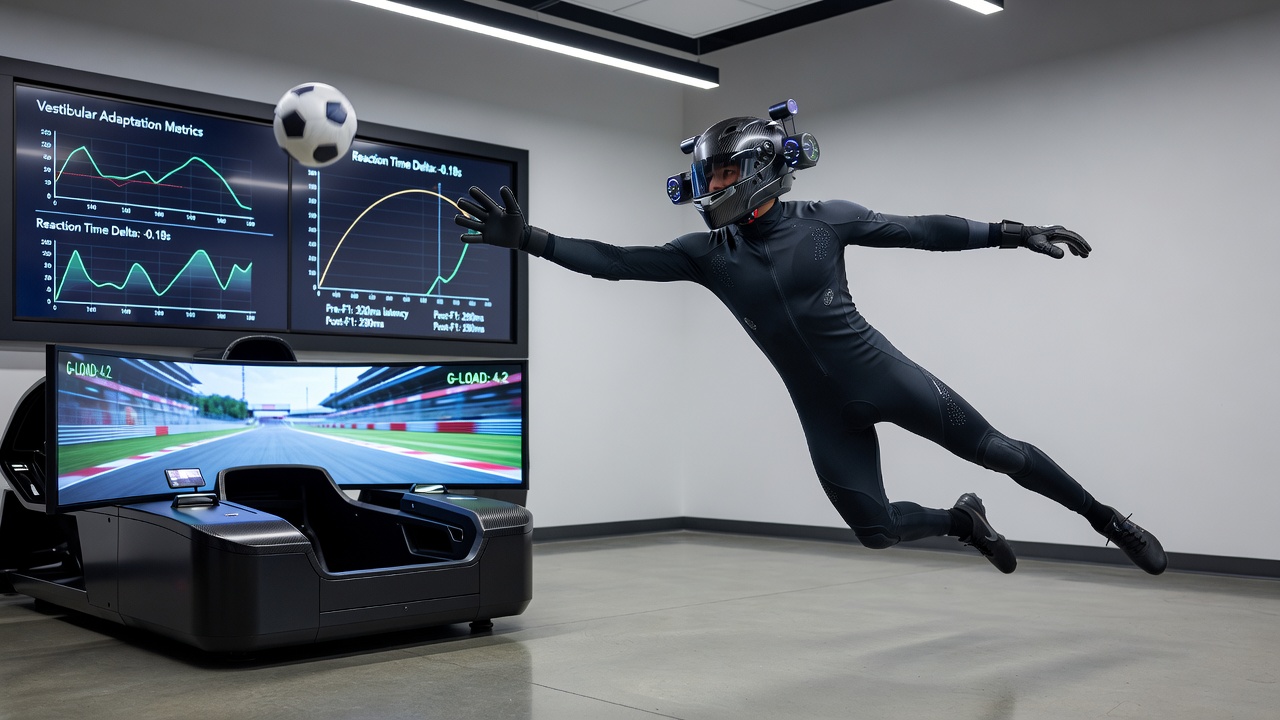
Physiological Changes Documented in Cross-Sport Populations
Adaptations include lowered thresholds for detecting head angular velocity, increased gain in the vestibulo-ocular reflex, and modified cervical proprioceptive weighting. When these changes are measured in goalkeepers, dive initiation occurs 18 to 25 milliseconds earlier on average during simulated penalty scenarios. Basketball players demonstrate smaller deviations in center-of-mass trajectory during airborne release phases, which correlates with higher three-point percentages in controlled shooting tests.
Training equipment borrowed from motorsport includes short-arm human centrifuges set to 3–4 g peaks and programmable rotating chairs that deliver unpredictable yaw stimuli. Sessions typically last 12 to 15 minutes and are scheduled two to three times weekly, according to protocols published by research groups in Sweden and South Africa. Heart-rate and eye-movement data collected during these sessions allow coaches to titrate intensity so that athletes avoid motion-sickness thresholds while still driving adaptation.
Measurement Tools and Performance Metrics
Objective assessment relies on video motion capture, inertial measurement units placed on the head and pelvis, and force-plate analysis of ground reaction forces. Researchers at the University of Calgary have developed a standardized battery that quantifies dive reaction time, peak angular head velocity, and landing stability in goalkeepers, while a parallel protocol at the Australian Institute of Sport tracks release consistency and shoulder alignment in shooters. Both batteries now incorporate vestibular-ocular reflex gain as a core variable.
Longitudinal tracking shows that gains plateau after approximately 10 weeks, yet retention remains high when athletes maintain one maintenance session every 14 days. Teams that discontinue the stimulus entirely observe partial regression within four weeks, which suggests the adaptations are use-dependent rather than permanent structural changes.
Conclusion
Evidence accumulated through 2026 indicates that vestibular adaptations originally cultivated in Formula One cockpits can be systematically transferred to football goalkeepers and basketball players, yielding measurable improvements in dive timing and jump-shot equilibrium. Continued collaboration between motorsport performance labs and team-sport organizations is expected to refine dosing parameters and identify which athletes respond most robustly to the combined stimulus.