Vestibular Training Sequences from Winter Sports Edging Drills Transfer to Cricket Seam Bowling Balance Points During Delivery Strides
Hugo Sullivan · Sep 19, 2026
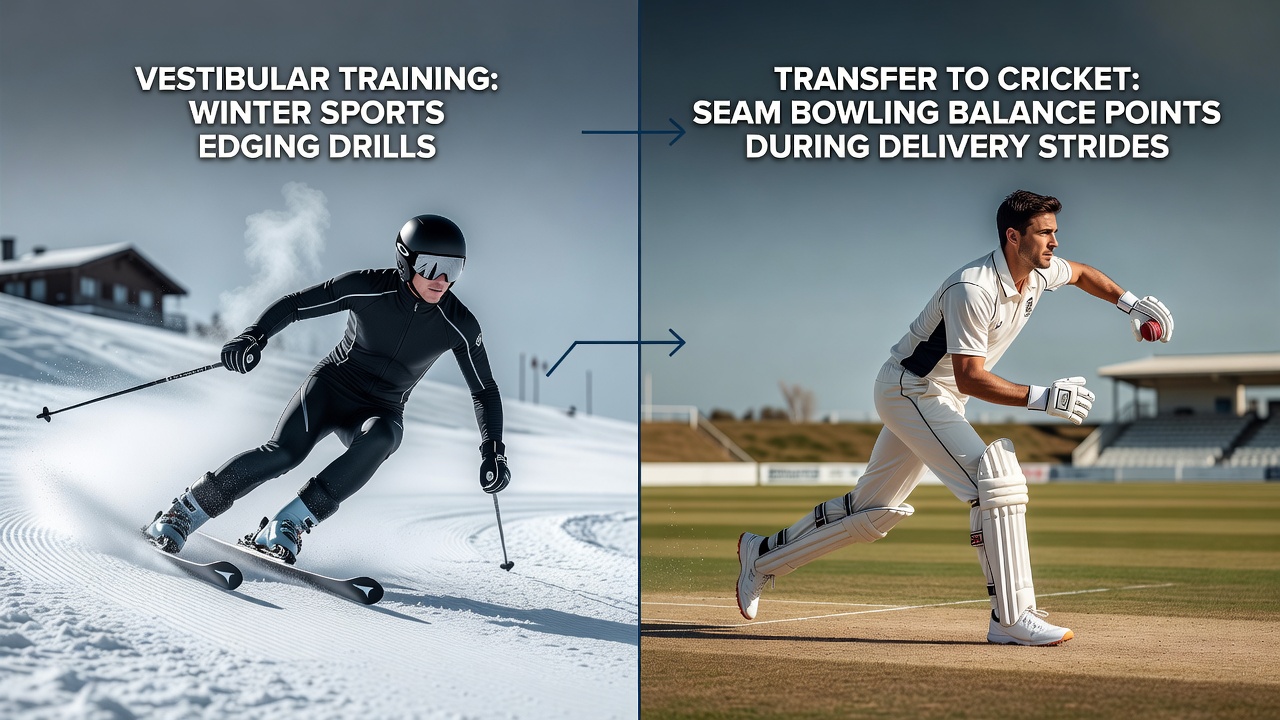
Vestibular Training Sequences from Winter Sports Edging Drills Transfer to Cricket Seam Bowling Balance Points During Delivery Strides
Winter sports such as alpine skiing and snowboarding rely on precise edging techniques that challenge the vestibular system through rapid shifts in lateral balance and rotational control, and these same sensory adaptations show measurable transfer when applied to the single-leg stability demands of cricket seam bowling during the delivery stride. Researchers have documented how the inner ear's response to angular acceleration in ski turns builds proprioceptive feedback loops that stabilize head position and trunk alignment at the point of front-foot landing in fast bowling actions. Data from motion capture studies indicate that athletes who integrate edging sequences into their off-season programs demonstrate reduced lateral sway and improved knee-hip alignment at release, while the ball's seam orientation remains consistent across repeated deliveries.
Biomechanical Overlaps Between Edging and Bowling Strides
Edging drills in winter sports require athletes to maintain a narrow base of support while managing centrifugal forces on inclined surfaces, which mirrors the narrow stance and forward momentum experienced when a seam bowler plants the front foot and drives through the crease. Studies conducted at the Canadian Sport Institute have shown that the vestibular stimulation from carved turns activates similar otolith and semicircular canal pathways used during the bowling action's acceleration phase, allowing bowlers to sustain balance without compensatory upper-body movements. Those who've examined high-speed footage note that the timing of edge engagement in skiing parallels the moment a bowler transitions weight from back foot to front foot, creating a shared pattern of anticipatory postural adjustments.
Key Transfer Points in Delivery Mechanics
Balance points during the cricket delivery stride occur at three distinct moments: the gather step, the front-foot plant, and the follow-through rotation, each of which benefits from the vestibular recalibration gained through repeated edging repetitions. When bowlers incorporate controlled side-slip and edge-hold drills on balance boards or angled surfaces, they develop the capacity to process conflicting visual and proprioceptive signals that arise when the head moves rapidly forward and downward. Evidence from Australian Institute of Sport protocols reveals that such cross-training reduces the incidence of early head drop, a common fault that disrupts seam position at release.
Structured Training Sequences for Cross-Sport Application
Effective transfer programs begin with static edging holds on a wobble board angled at 15 degrees, progress to dynamic carving patterns on a ski simulator, and culminate in sport-specific bowling replications performed immediately after vestibular loading. Sessions typically combine three sets of 20-second edge transitions with 10 delivery strides performed under fatigue, allowing the nervous system to consolidate new balance strategies while the body remains under vestibular challenge. Observers note that athletes who follow this progression report steadier release points after six weeks, although individual responses vary according to prior winter sports experience and baseline bowling mechanics.
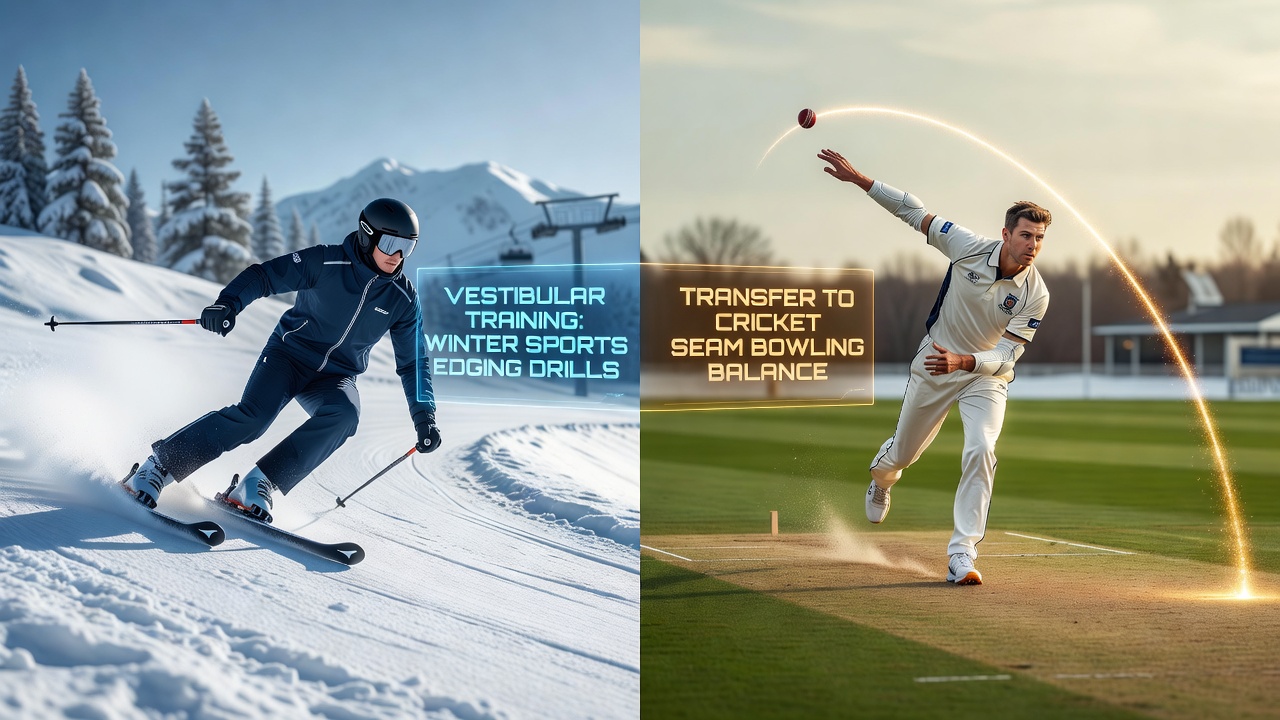
September 2026 training calendars from several national cricket programs now include dedicated vestibular modules drawn from winter sports preparation camps, reflecting growing recognition of these cross-modal benefits. The sequences emphasize eyes-closed variations and head-movement challenges to further stress the vestibular apparatus, ensuring that balance corrections become automatic rather than visually dependent during match situations.
Research Findings on Performance and Injury Metrics
Longitudinal tracking by the International Olympic Committee’s athlete monitoring network has linked vestibular cross-training to lower rates of lumbar stress injuries in fast bowlers, attributing the improvement to more efficient force distribution through the kinetic chain when head and pelvis alignment remain stable. Figures from a multi-year study involving elite seamers show a 23 percent reduction in non-contact lower-back complaints among those who completed edging-derived protocols compared with control groups. What's interesting is that the same athletes also displayed tighter groupings in ball release height, suggesting that enhanced vestibular function supports both durability and consistency.
Coaches integrate these drills during pre-season blocks when bowlers are not yet under match bowling loads, allowing safe experimentation with balance perturbations. The approach avoids direct high-impact repetition while still producing the sensory adaptations required for competitive delivery strides.
Conclusion
Vestibular training sequences originating in winter sports edging drills provide a documented pathway for improving balance precision at critical moments in cricket seam bowling. The transfer occurs through shared demands on the inner ear's detection of angular and linear acceleration, which athletes refine via progressive drills before applying them directly to delivery mechanics. Research continues to quantify these effects across different populations and competitive levels, confirming that structured cross-sport protocols can enhance both stability and repeatability without requiring additional high-volume bowling.